Verification framework
BOLD Recycling
The rules for verifying the recycling of organic waste (Biowaste), from source separation to composting at an accredited facility.
See the criteria
- Framework version
- 1.0.1 · Published
- Reference methodology
- BOLD Recycling methodology
- Result
- RecycledID ·
The recycling result
Evidence follows the material.
The framework follows organic material from its source through the recorded recycling pathway. The published result states verified mass, not a climate calculation.
Starting point
Organic material at risk of landfill disposal
The source, material and recorded mass start the custody chain.
Recorded pathway
Material composted
The material is traced through collection and processing to an accredited composting facility.
Verified recycling result
Result expressed as final verified mass.
The certificate states the final verified mass supported by the published evidence.
Verification criteria
What needs to be proven.
Evidence about the material, recorded mass and operation is checked before recycling can be certified.
Read the framework rules opens in a new tabMaterial eligibility
MassID type, subtype, unit and value meet the framework requirements.
Participants
Generator, hauler, processor, recycler and integrator roles are identified as required.
Operational evidence
Weighing, sorting, transport, drop-off and recycling events are checked.
Locations and manifests
Accredited addresses and required transport or recycling documents are matched.
Final mass
The verified recycling outcome is quantified from the recorded material evidence.
Duplicates and conflicts
Uniqueness and collision rules prevent double counting or conflicting issuance.
How rules are applied
From methodology to verification.
The methodology, verification framework and executable application have different roles.
01
Methodology basis
BOLD Recycling Credit
Defines the methodology for eligibility, custody and the recycling result.
02
Verification framework · MvF
BOLD Recycling Credit Framework
Translates the methodology into verification criteria and evidence.
03
Executable application · MvA
Rules in execution
Open-source code applies the published criteria to each record's evidence.
Independent assurance
Review by auditors and validation and verification bodies is recorded separately, when available. Automated checks do not constitute that assurance.
Published result
From evidence to certificate.
The RecycledID records the final verified mass. This result corresponds to an amount of C-BIOW.
Explore the C-BIOW credit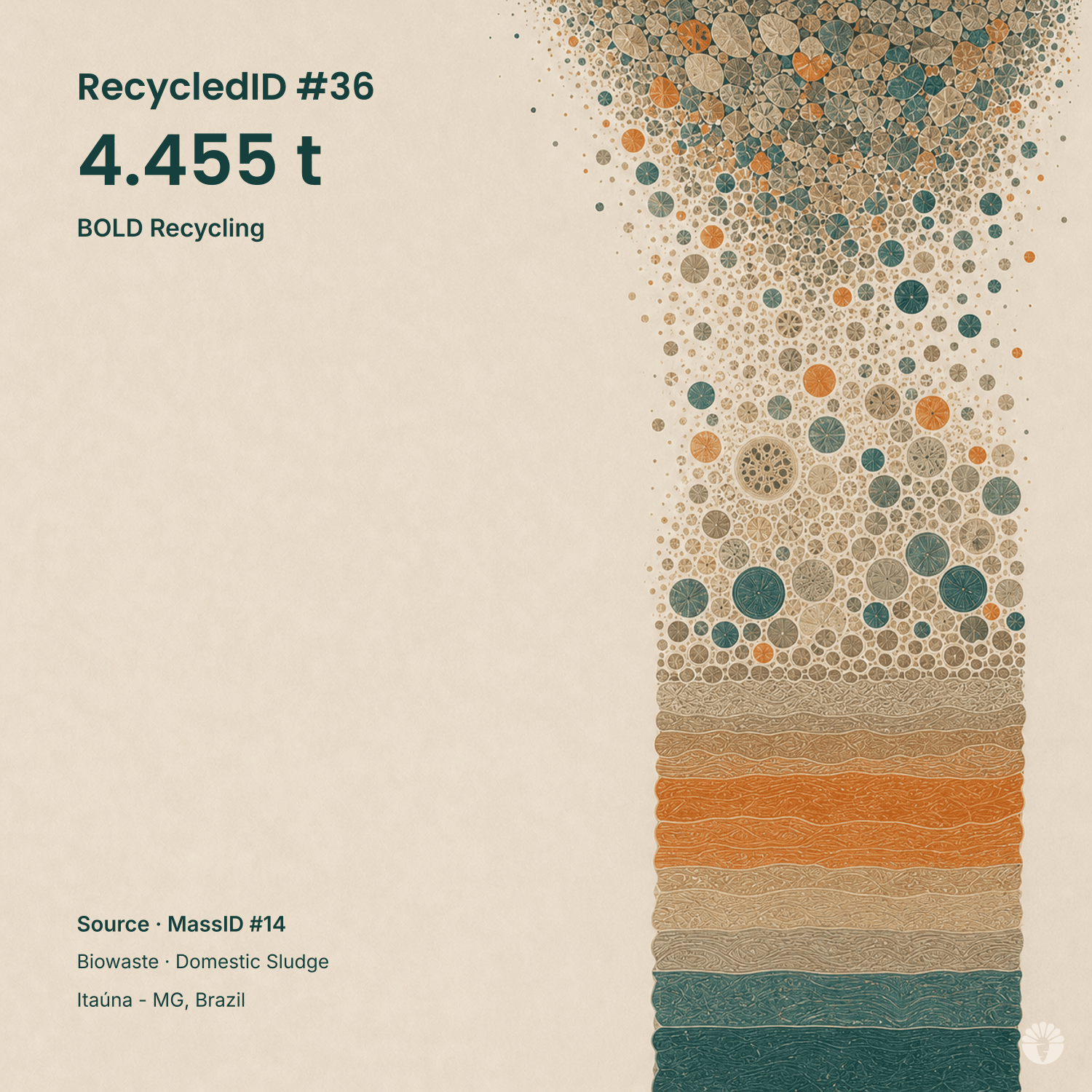 Example of certified resultRecycledID #364.455 t of Biowaste · source: MassID #14
Open the certificate to inspect the source material, verification and corresponding credit amount.
Documentation
Access the rules and their sources.
The specification details eligibility, evidence and final-mass verification. The rules catalog shows how those criteria are applied.
Read the full specification opens in a new tab